The Hidden Layer
Why Changing Your Behavior Isn't Enough

You identified an aspect of you that you’d like to change. You named it. You committed to doing it differently. And for a while you did. Then something happened — a high-stakes moment, a difficult person, a bad week — and there it was again. That's not weakness. That's what happens when you only work above the waterline.
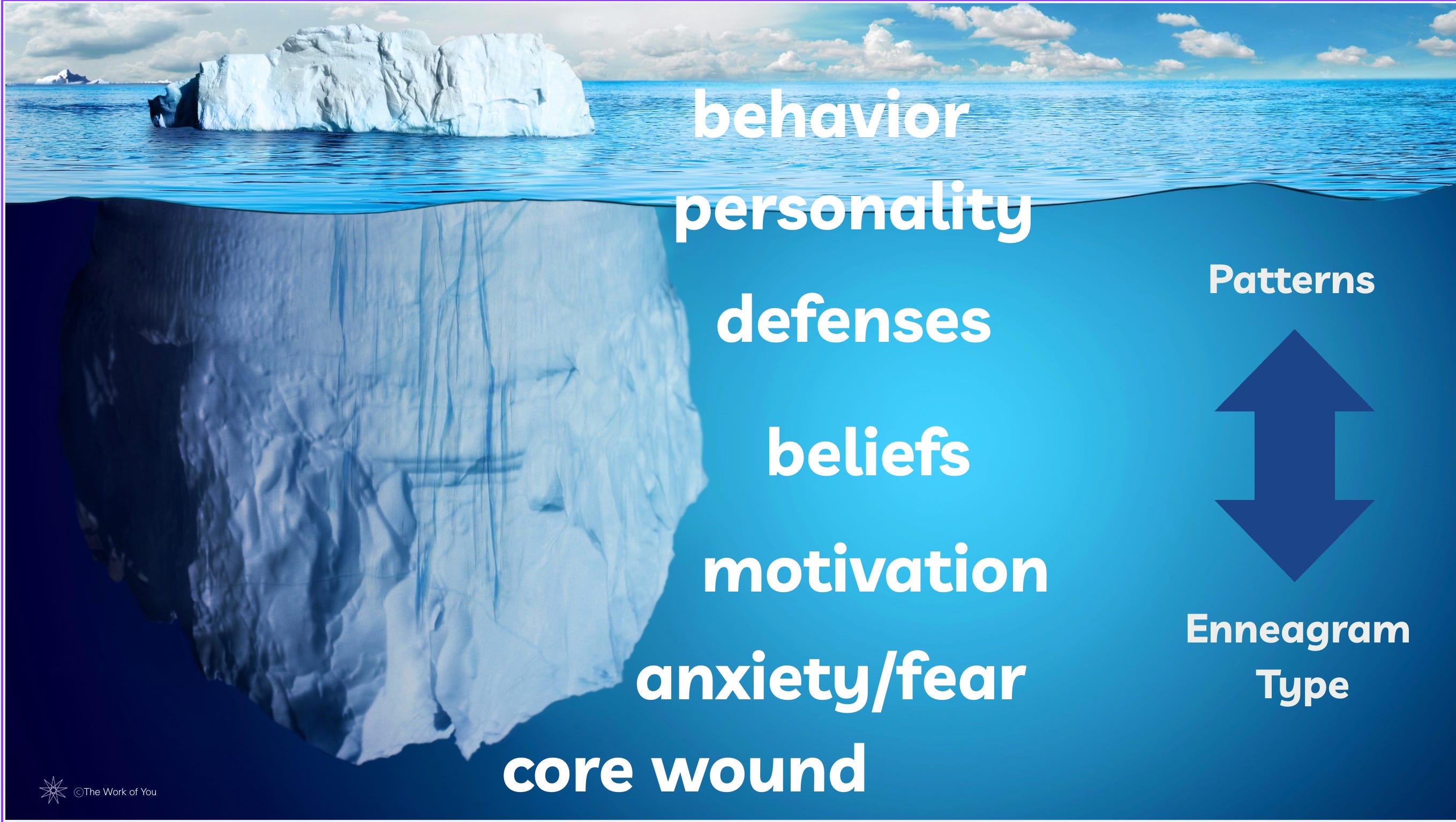
Most leaders are only working on the top 10-20% —identifying a behavior; maybe some personality. Just like with the iceberg, this is the small portion that's visible — to others and to themselves. If only it was this easy. If all it took was someone saying 'I wish you'd let me finish before jumping in' — and you could simply receive that and change — we'd all be walking around as perfect versions of ourselves.
But sadly that’s not how it works. There's an entire architecture underneath our behaviors that most leaders have never been introduced to — I call it your hidden layer. As depicted in this iceberg image — above the waterline: behavior, at the waterline: personality, and below: defenses, beliefs, motivation, anxiety/fear, core wound. The deeper you go the older it gets. And the older it gets the more automatic it is. We’ve been walking around with these layers since we were small — that’s where many of them initially developed. What’s even more wild is often we don’t have cognitive memory or real understanding of what created our core wound that gave birth to the fear or the protective motivation that was put in place to protect us from said fear. This is all operating in our subconscious and is rarely thoughts that we think to ourselves, it’s more like the code operating the system within us.
Our Human (and Hidden) Layers
Behavior — what everyone sees. What receives feedback, gets coached, managed, and “developed.” The most visible to all because this operates at a conscious level. And yet it’s the least revealing and the furthest from real sustainable change or growth.
Personality — the collection of patterns and tendencies you’ve developed over time. Think about it as your “ways of being.” Feels like you. Often isn’t the full you.
Defenses — the protective strategies that can keep you stuck or causes you to suffer. This begins the hidden layer portion deep in your subconscious
Beliefs — the conclusions you drew or things that were instilled in you about the world, yourself, and what it takes to survive and belong. Many formed before age 10.
Motivation — the underlying drive that’s put into place to protect you from your core fear. Patterns are born here and show up in every layer above.
Anxiety/Fear — the fuel underneath the motivation. The thing the whole structure is built to protect you from feeling.
Core wound — the deepest layer. The original experience or conclusion that started it all, often not accessible in cognitive memory.
Once you see all the layers that live beneath the surface, it becomes clear why working at the waterline will only take you so far. When you only develop the behavior layer, you get temporary change. You can learn a new skill, practice a new response, get better feedback — and three months later you’re back to the same pattern under pressure. Because the behavior isn’t the problem. It’s the symptom. The real driver is sitting four or five layers below anything your last leadership training touched. This is also why I often speak of a leadership gap in the workplace (The Leadership Gap No One Talks About, March 1) — it’s one thing to teach leadership skills, it’s another thing to teach the person who’s leading about themself.
Uncovering Your Hidden Layers
So what helps to access those deeper levels? In nearly 15 years of coaching, one thing has consistently surfaced what lives below the waterline. It’s the Enneagram. What blew me away in 2017 was how the Enneagram surfaced hidden layers I had been trying to unpack for years — connecting dots I couldn't connect on my own. Here’s my own iceberg — what it looks like when the layers are brought to life. I actually shared this live on a recent podcast episode as well — talk about a vulnerability hangover!
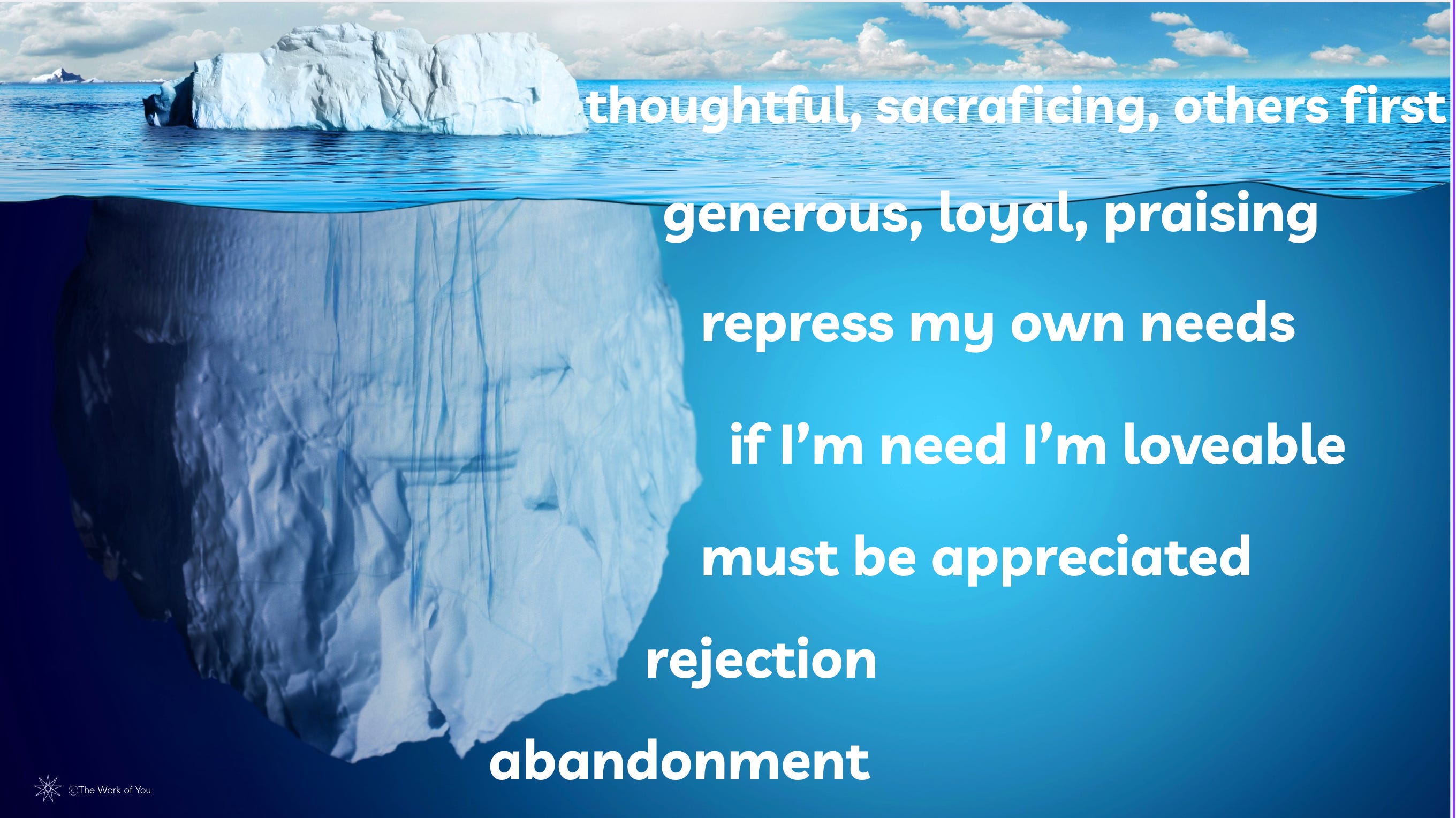
Over the years I had been seeing the behavioral patterns, being self-sacrificing and putting others first, but had no clue where they came from or how to manage them. Until I understood them.
The Enneagram is the tool designed specifically to work at the motivation and belief level — not the behavior level. In turn, this helps you identify the unconscious patterns that are driving your personality and behaviors. It offers transformation from the inside out, unlike most other assessments that simply mirror back what you and others can already see at the waterline. Further, it takes into account that we are three-brained beings (IQ, EQ, and BQ — head, heart, and body) and helps us to see patterns in all three where many assessments only focus on cognitive preferences.
When a leader starts working below the waterline — understanding their defenses, tracing their beliefs, seeing their core motivation — everything changes. Not because they become a different person. Because they finally understand the person they’ve always been. And from that understanding, real choice becomes possible for the first time.
The Work of You
Identify one pattern you keep bumping into. You’ve probably been working on it at the behavior level — trying to do it differently, catching yourself, making a note to change. That’s a start; awareness at any level is important. But what if the behavior is just the tip? What’s one layer deeper that might be worth getting curious about?
If you’re curious to go a bit deeper, I’m offering a free 30-minute reflection, Is There a Hidden Layer Running Your Leadership? Check it out and see what surfaces for you.
If you’re ready to jump right into getting your Enneagram report, sign up for my next Masterclass: The Hidden Layer of Leadership, live on May 27th.