Stop Leading From Competence. Start Leading From Strength
Your Strengths Aren't What You Think They Are

It always amazes me how leaders who've taken every assessment can still be running with the wrong insight. They can tell you their top 5, the introvert/extrovert and what is their dominant color, yet something is still missing. Sure they are good at their job, competent in all the necessary ways and work well with others — but when I ask them if they are energized, there’s a lingering silence. That’s the insight!
Here’s the deal — your strengths are not what you’re “good at.” Instead I want you to think of them as the talents you have that give you the most energy and keep you engaged. As Marcus Buckingham is known to say “a strength is an activity that strengthens you. It draws you in, it makes time fly by while you’re doing it, and it makes you feel strong.” We can have high competency in lots of things and still find those things draining.
Strengths - Redefined
Per Gallup, strengths are talents that come more naturally to you — and the more you use them in different ways, the stronger they become. The key signal isn't performance. It's energy. What are you doing when time flies? When you'd do it even if nobody was watching? When you finish and feel more alive than when you started? That's a strength.
This combination of energy and engagement is also what makes strengths unique to you. Again, you can be good at something and that doesn’t mean it’s a strength if it’s not something you enjoy or are energized by. For example, I may be good at working a room, networking, driving up sales leads; however, if that is something I find especially draining and I actively look to avoid taking on that responsibility, then it’s not my strength. This is important to consider in organizations – have people been cast in the correct roles? It’s not enough anymore to only evaluate an employee’s performance to determine if they are in the right role, you need to also look at how energized and engaged they are when doing their job.
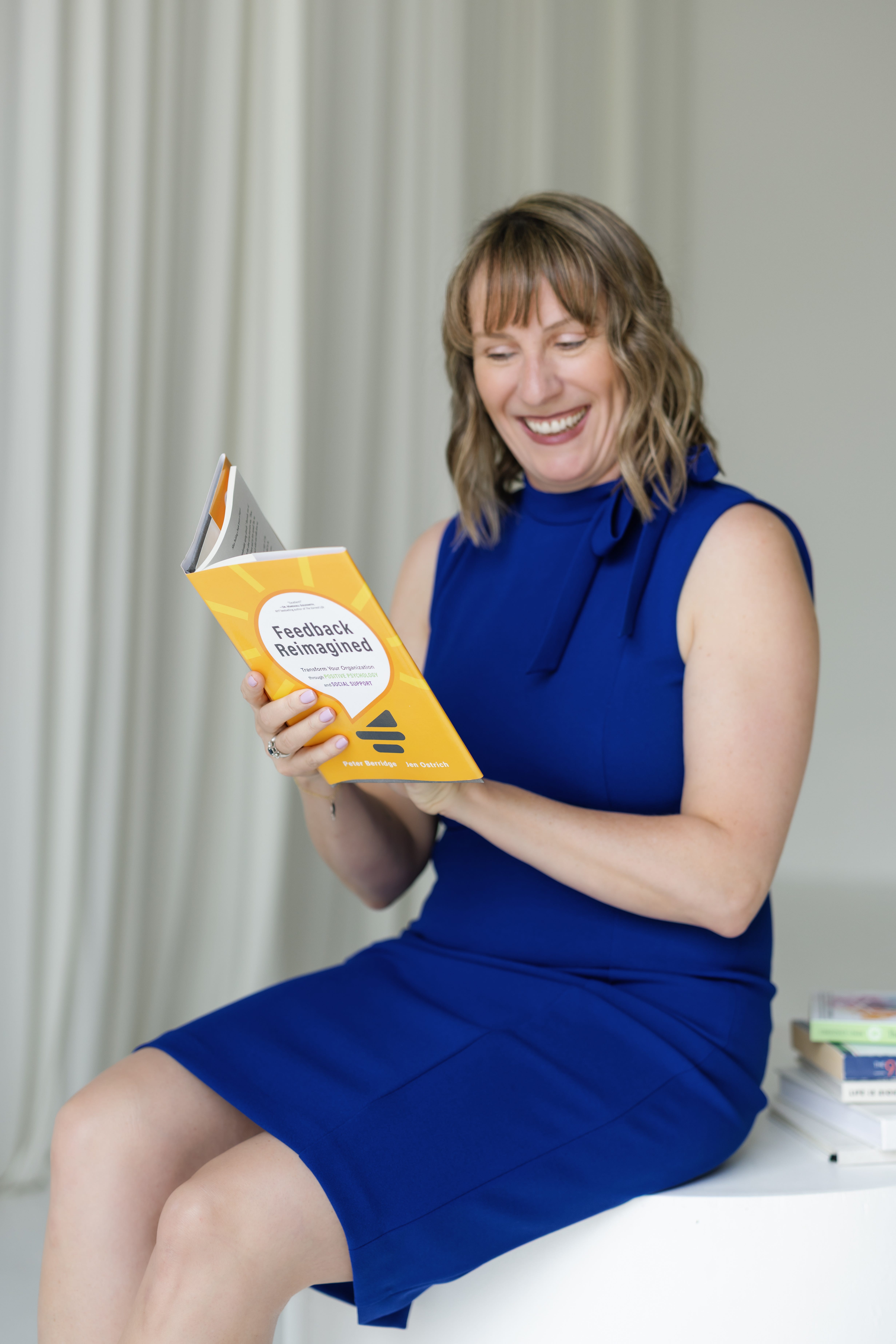
As captured in the book I co-authored, Feedback Reimagined (Modern Wisdom Press, 2023), using one’s strengths has been shown to increase happiness, engagement, and productivity while decreasing depressive symptoms. Measuring strengths and intentionally developing them through application, therefore, is a way to achieve greater effectiveness and happiness. Research supports that use of Signature Strengths in the VIA survey of character strengths for as little as one week has a statistically significant positive impact on well-being six months later.
Why Strengths Over Weakness
Many of us fall victim to overly focusing on where we need to improve — even when someone is offering us positive feedback, we remember / focus on the negative. Our brains are to blame for that. It’s a concept called “negativity bias” where our brains fixate on negative information as a means of protecting us from any potential threats. This works when our lives are in danger; however day-to-day in the workplace and when we are working to show up as our best, fixating on our own “weaknesses or areas of improvement” is not as helpful as you may think.
I was one of these people constantly focusing on what I needed to “fix” about myself vs what I was energized by until I heard this metaphor from Positive Psychologist and Author, Robert Biswas-Diener:
Think of a sailboat. The boat itself is called the hull. If there is a hole in your hull, that is considered a weakness. But to what extent should you focus on this said weakness? Well, to the extent that gets in the way of you sailing. If it’s a large hole and water is rushing in then it becomes an area of focus to address. If it’s a crack that can simply be managed over time it’s something to remain aware of, but not to focus on. This is how to think about your weaknesses – if it’s something keeping you from being effective at your job, it’s worth focusing on. If it’s something that is not getting in your way, simply remain aware of it and manage it to the extent necessary. However, even if your hull is perfect and has no holes at all, you still are not going anywhere without your sail. Your sail is your strength; it gives you the power to move in the direction you choose.
This is why that data in your “top 5 strengths” matters — because those talents are your own superpowers. They are where you are your most energized and most engaged. They are what will move your boat forward to where you need and want to go.
How much time do you ruminate on what you’re “bad” at vs doubling down on the areas where you feel the most energized?
I aim to “walk my own talk” and just this past January I sat down with a journal and asked myself these same questions. Looking at my Top 5 — Communication is #2 and I decided 2026 would be the year I’d double down on all the ways to use it — and here we are, a weekly Substack, a weekly podcast, new masterclasses, and more to come!
Growing With Your Strengths
I’m going to invite you to pull out those assessments filed away in your drawer or back up hard drive, and let’s put them to use. If you’ve never taken one about your strengths, I highly recommend these two options: Gallup’s Clifton Strengths or VIA Character Strengths.
Let’s talk about how to actually use your strengths for good — two specific ways:
Strengths as a Doorway to Growth
This concept was born out of my own powerful experience after taking the VIA assessment. I was overly focused on what attribute came in dead last (doing exactly what I’m telling you not to do - focus on the bottom ones!), the word Curiosity. And the coach who I worked with invited me to go back up to the top 5 and asked me which one of my top 5 could help me improve Curiosity?
Something so cool happened in that moment — I immediately knew what to do. I saw my #3 strength, Perseverance , and I knew I simply needed to set a goal or an intention around bringing curiosity more to the front of my mind each day. If I committed to check in each day and ask myself what I was curious about, etc. for 30 days, it immediately felt do-able. It felt do-able because my Perseverance strength is so natural to me that it makes anything attached to it feel more achievable. Far more doable than simply trying to brainstorm ways to be more curious.
So what’s an area you would like to grow in and how could one of the ways you are naturally talented help you? Maybe you’re strong in Maximizing and you want to improve in the Developer arena — you have a gift of seeing how something can move from good to great. How could you do that with the people around you — helping to develop them by pointing out their strengths to double down on?
Strengths as Shadows
Another opportunity for growth when it comes to your strengths is becoming aware of which ones you may over-use. People like to say “that’s my strength but it’s also my weakness.” I disagree with that language as your own unique and natural talents are never a weakness — they are a part of you and often your superpowers. However, when we over-use them they can get in our way.
Often our most developed strengths come so naturally to us we don't even realize when they're dominating the room. If you have a strength of Ideation and yet as a Manager you are looking to further develop your team to find their voice and perspective, you may need to adjust the application of your own Ideation in group brainstorms to allow space for your team to develop.
Or the Enneagram 7 leader with the WOO strength — winning others over, generating enthusiasm, making everything exciting — is magnetic. Until the team needs depth, follow-through, or hard feedback. The strength that built the culture is now keeping it stuck.
Strengths need to be managed at times, not only maximized. Knowing when to lean in and when to pull back is the mark of a leader who truly knows themselves. And that kind of knowing only comes from doing the work of you.
The Work of You
A few reflective prompts for you to consider:
What are you doing when you feel most energized or engaged?
When do you experience flow — when does time just disappear?
Are there strengths you’re underusing? If you’ve taken an assessment, look at your top five and ask: am I actually leveraging these daily?
For more on this topic, listen to the podcast, Why Your Strengths Matter More Than Weaknesses [S1, Ep 6]. And to learn more on the importance of strengths when it comes to gathering and giving feedback, check out Feedback Reimagined.